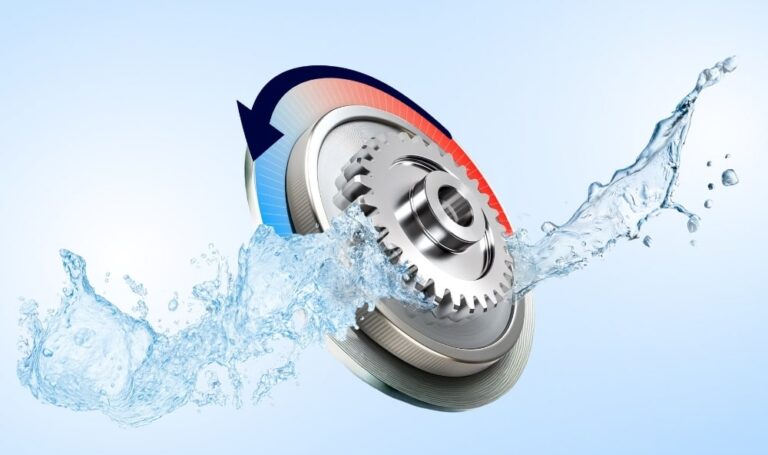
As manufacturers strive to hit sustainability goals and regulatory requirements, the need for innovative solutions becomes clear. Here we examine the positive impact of low temperature parts cleaning solutions, including how leading European passenger transport provider, Arriva is benefiting from it.
The Hidden Sustainability Impact of Part Cleaning Processes
Many conventional parts cleaning processes rely on high temperatures, resulting in higher energy use and carbon emissions (CO₂). Few are measuring the cumulative effect of these maintenance methods. This isn’t just a potential compliance risk; it’s a missed opportunity for sustainable cost savings.
The Need to Reduce Energy & CO2
It’s projected that the UK & EU will fall short of their Net Zero emissions targets.1 At our current pace, temperatures are expected to rise between 1.9°C and 2.7°C by 2100.2 Emissions need to fall much faster to keep us on, or below, the tipping point of a 1.5°C.
Manufacturing, production, and processing consume 38% of global energy and 30% of all global emissions.3 It’s crucial these industries step up their sustainability efforts. While regulations and company targets have been set, without greater action these are little more than a wish list.
HOW MUCH COULD YOU SAVE?
How Cleaning Chemistry Makes a Difference
High temperature parts washing is effective but can burn unnecessary energy. When used regularly, if not daily, this can add to significant wastage. The more energy parts washing systems use, the greater the CO₂ emissions.
This is why we’ve developed Kleen35R, the parts cleaning solution that allows customers to lower their wash from 65°C to 35°C with the same cleaning performance.
This low temperature cleaning chemistry brings multiple sustainability advantages4:
- Annual Cost Savings: Up to £1,225 per machine
- Energy Reduction: Annual savings of 8,502 kWh per machine. That’s equal to keeping 54 LED light bulbs on all day, every day, for a year
- Lower Carbon Emissions: 1090 tonnes of CO₂ saved. That’s equal to saving 50 trees a year
Across our global customers, annual savings could reach5:
- Annual Cost Savings: £8 million
- Energy Reduction: 31 million kWh. That’s enough to power 11,481 homes for a year
- Lower Carbon Emissions: 7,230 tonnes of CO₂. That’s equal to saving enough trees to fill 920 football pitches
Kleen35R Low Temp Chemistry in Action
Arriva is a leader in European passenger transport, in the UK it’s responsible for moving millions of passengers safely, efficiently, and sustainably every year. Like many companies, Arriva faces increasing pressure to reduce operational costs, improve workshop efficiency, and deliver measurable sustainability improvements. It needed a more energy‑efficient, safer, and faster cleaning process without compromising cleaning performance.
Arriva trialed Kleen35R, Safetykleen’s low temperature cleaning solution, together with a M115 Aquakleen Automatic parts washer. It switched its 30-minute cleaning cycles down from 70°C to 35°C and saw an 48% energy reduction, falling from 56kWh over a 24-hr period to 29 kWh.
“That’s a definite improvement! Clearly better,” says Billy Hart, Engineer at Arriva’s Gray’s Garage in North London, where they service a fleet of 70 buses.
Switching to Kleen35R also reduced the amount of steam generated from parts washer. Our laboratory tests show that there is 5x less steam when washing at 35°C versus 65°C. That improves safety, comfort and visibility for operators who would otherwise need to take precautions.
Billy explains: “When you first open the machine, previously you’d get a face full of steam. It’s not nice if you forget, or you’re moving too quickly. Now there’s hardly any steam. I can get in, get my parts out and crack on”.
FOOTNOTE:
1&3. IEA
2 . McKinsey Global
3. Based on Safetykleen’s M315 mid-sized automatic parts washer, operating 5 days a week, 52 weeks a year. The information is based on our laboratory testing and should only be used as a guide.
4. Based on 90% of our customers switching to Kleen35 low temperature parts cleaning across all Manual, Jetkleen, Automatic and Sonickleen machines.